Midlife transition: questioning the stories we've inherited
Many women in midlife aren't in crisis - they're recalibrating. Remi Baker, founder of The Third Chapter, explores the inherited stories that hold women back and what becomes possible when we start to question them.
Once upon a time, someone wrote the rules for midlife.
I'd like to know who.
Because the stories we've inherited about this stage of life are remarkably consistent. That opportunities narrow. That restlessness means something is wrong. That if you didn't do something by now, you probably won't. That by midlife, life is somehow winding down.
And perhaps most pervasive of all - that if you're questioning what's next, you must be having some kind of crisis.
I hear these stories often. Not from women who've given up, but from women who are accomplished, curious, and very much alive to the possibility that something more is available to them. They say things like:
I think I've probably left it too late.
I should be grateful for what I have.
Maybe this is just what this stage feels like.
These aren't truths. They're inherited stories. Passed down through families, through culture, through decades of messaging about what it means to be a woman of a certain age. And they're remarkably hard to shake - even when we know better.
What the research actually says about midlife
The evidence tells a different story.
Many people report becoming happier as they age. Purpose continues to matter - often more, not less. The concept of the midlife crisis as a universal experience has been repeatedly questioned by psychologists who find little evidence for it as a fixed developmental stage.
One idea has stayed with me: the stories we tell ourselves about ageing can become self-fulfilling. If we stop expecting growth, creativity, possibility - perhaps we stop noticing them when they arrive.
Which raises an uncomfortable question.
What if the discomfort many women feel at this stage isn't a sign that something has gone wrong - but a sign that something is asking to change?
My own midlife transition
I turned 62 this year. It has been two years since I stepped away from a role that had been a huge part of my identity. Not because I had a big reinvention plan. Not because I knew what came next. But because something in me was asking for space.
Before that, I'd spent two decades in PR, then retrained as a coach, then became the CEO of a boutique coaching company. On paper, a successful trajectory. And yet.
Somewhere along the way, I had drifted from the work I was actually placed on earth to do - which is to work directly with people. Not to sit in business meetings.
The retreat in Jamaica where I finally admitted this to myself was one of the things that helped me see more clearly what what I knew on one level. I needed to step out and away long enough to hear something more honest.
And from there, The Third Chapter began.
What midlife transition actually looks like
The women I work with are not falling apart. They're recalibrating.
Asking harder, more honest questions about what they actually want - not what they were told to want, not what made sense ten years ago, but what matters now.
Sometimes that restlessness arrives as anticipation. Sometimes as grief. Sometimes simply as a feeling that a different conversation is beginning. Not because what they have isn't enough. But because dreams change. What mattered at 32 may not be what matters at 62. And "more" doesn't necessarily mean bigger.
Perhaps it means more freedom. More creativity. More meaning. More of what is true for you now.
What becomes possible: a real example
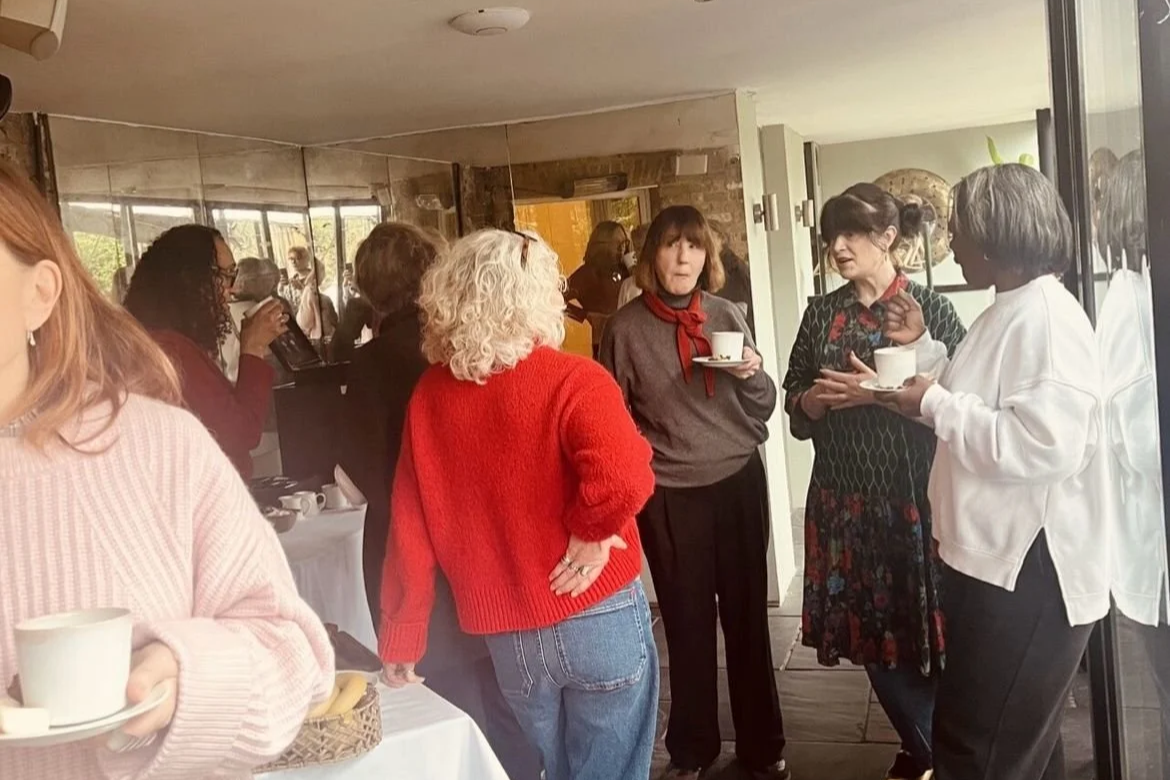
One woman who attended a Third Chapter Immersive arrived carrying something she hadn't let herself acknowledge. She was successful, credible, known for her work - but underneath the identity she had built and held tightly for years, something else had been waiting.
She left with a decision she'd been avoiding for a long time.
Natalie Lue - author, podcaster, and creator of The Baggage Reclaim Sessions - has since spoken about her experience publicly, on her own Instagram and on two podcasts. She described waking up the morning after the Immersive feeling genuinely excited for the first time in a long time.
"My commitment," she said, "has brought me a great deal of joy."
That's not reinvention. That's reclamation.
And it's what I see, in different forms, again and again in the women I work with.
Some are happily downsizing and finding that less is genuinely more. Some are taking on the most ambitious work of their lives - NED positions, directorships, legacy businesses. Some are leaving corporate careers to work independently, on their own terms, finally. Some are simply learning to live without the constant low hum of anxiety about what's next.
What they share isn't a destination. It's a decision. To stop waiting for permission. To question the stories they've been handed. To ask - seriously, honestly, without apology:
What might still be possible, for me?
That question, I've found, is where things start to shift.
Starting your own midlife transition
If any of this is resonating - if something is shifting for you and you're not yet sure what it means - you don't have to have the answer before you begin.
You just need to be willing to ask the question.
The Third Chapter offers one to one coaching and one day immersives for women navigating this stage of life. And inside organisations, facilitated conversations for mixed gender groups exploring what midlife means for their people.
If you'd like to find out more, I'd love to have a conversation. Just get in touch.